
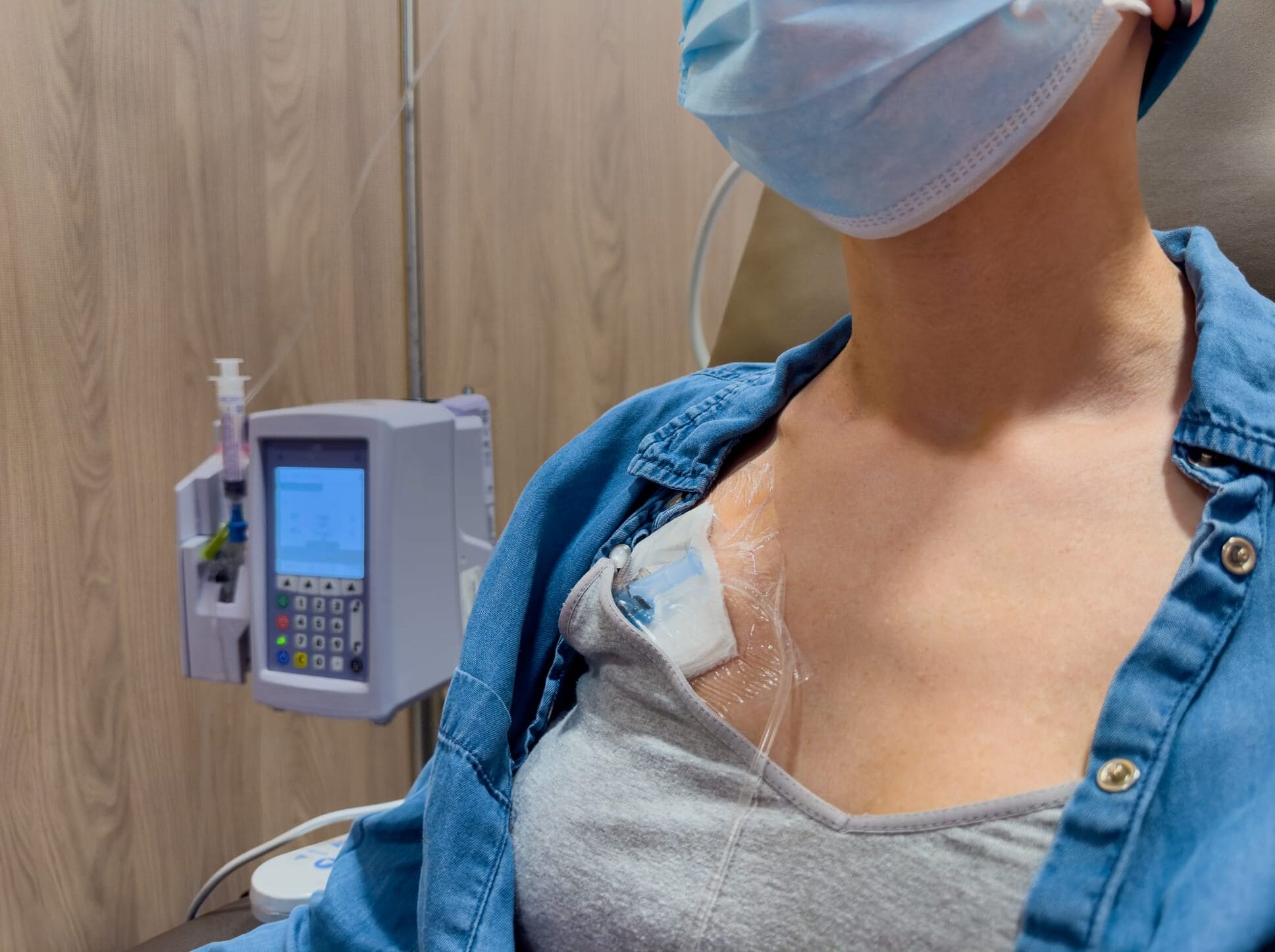
If your treatment plan for myasthenia gravis (MG) means you need frequent infusions, having a healthcare provider hunt for a vein can become a regular part of life. If getting an IV becomes stressful, a port can help. Learn what a port is, and when they become useful for people with MG.
What is a port?
Also called a port-a-catheter or port-a-cath, a “port” is a medical device that provides access to your veins. It is typically placed at the chest, under the skin, and connects to a catheter that goes into one of the larger veins in your body. Ports are meant to stay in place for the long-term — they can be used for months, or even years.
This is useful for intravenous treatments (such as intravenous immunoglobulin, or IVIG), and with blood draws. Instead of a medical provider having to find a vein with every treatment — which can be both painful and time-consuming — a port is always on standby.
Ports are generally only used when a patient will need regular infusions or other treatments involving needle sticks. Placing a port is a surgical procedure; while ports are relatively low-risk, they’re not risk-free (which will be discussed below). If your provider suggests getting a port, it means the benefit-to-risk ratio has already been calculated and that your doctor thinks the benefits outweigh the risks.
What are the advantages of a port?
As mentioned, ports can mean easier treatment. After cleaning the skin above the port, a medical professional will insert a needle through your skin and into the port. They won’t need to hunt for a vein or try multiple times to get in IV in, and you’ll avoid the injuries and scarring that can come with IV treatments.
In essence, ports can mean easier, more comfortable treatment. They can be a game-changer for patients who need frequent infusions, especially if scar tissue has developed in the veins.
If they are well-cared for, ports can stay in position for several years.
Read more about MG testing and diagnosis
What are the disadvantages?
The insertion of a port is classified as a minor surgical procedure, and there is always the risk of bleeding when it is performed, especially if it is not positioned correctly.
While ports are meant for your own comfort and convenience, some people find the sensation of having a port to be strange and uncomfortable, especially when attempting to sleep. In addition, an implanted port often creates a pulling sensation that can take a while to get used to. It can also take some time for the skin around the port to heal, meaning that initial discomfort is common.
Ports need to be taken care of. A port needs to be regularly flushed to clear away residue; this is typically performed at least once every four to six weeks. If this is not done they can become clotted, and will need to be replaced. In addition to the risk of clot formation, there is also a risk of infection, meaning that ports should always be kept clean and well-maintained.
If you have any questions regarding whether having a port inserted is right for you, talk to your doctor, who should be able to take into consideration your concerns and address them the best they can. Remember, a port is primarily there for your own convenience and comfort, and you should tell your doctor if you feel that it is not the case.
Sign up here to get the latest news, perspectives, and information about MG sent directly to your inbox. Registration is free and only takes a minute.
