
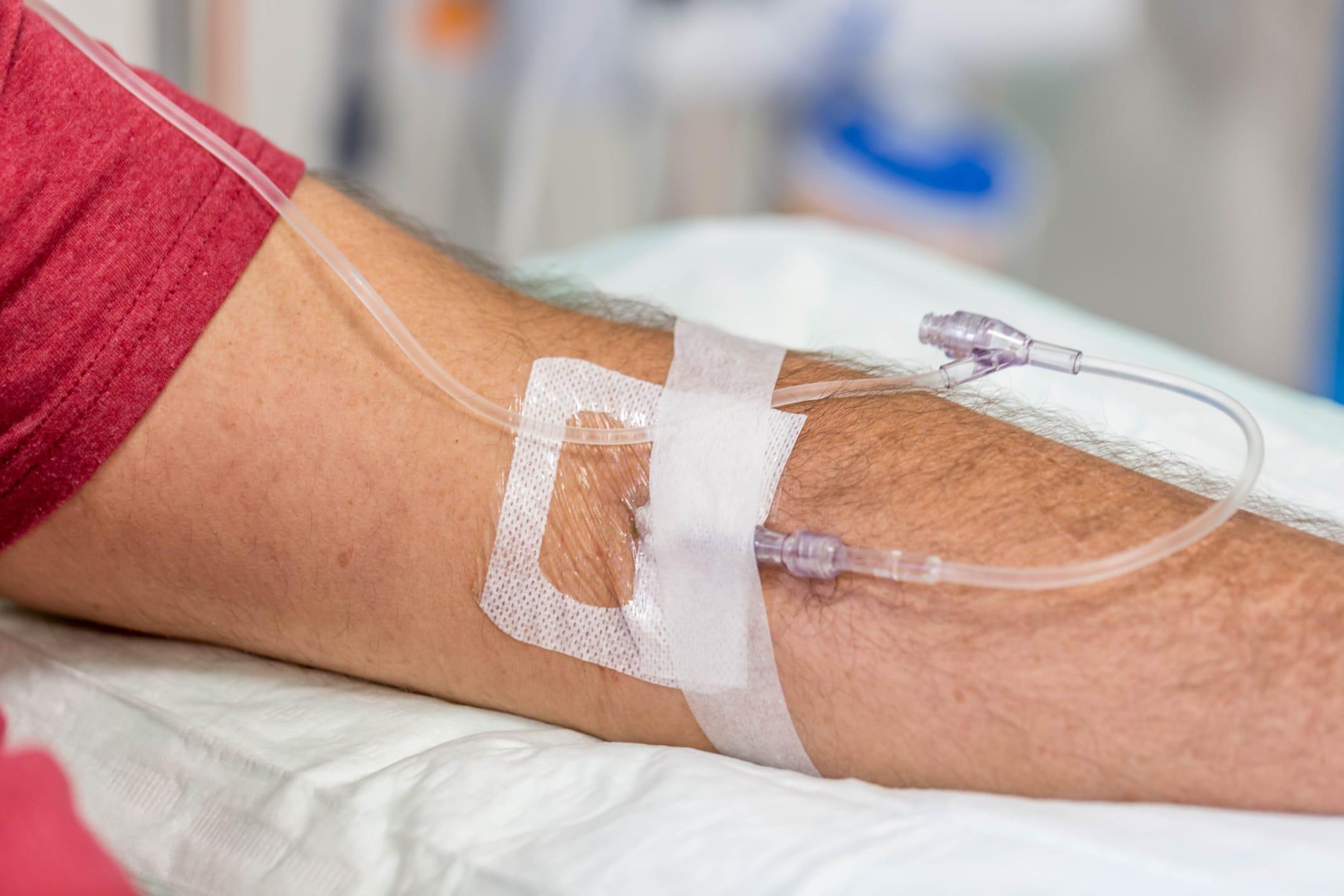
Some people living with myasthenia gravis (MG) may experience a sudden worsening of symptoms. This comes in two main forms: an MG flare that worsens muscle weakness, and a myasthenic crisis that affects respiratory function, which requires urgent hospitalization. In both cases, intravenous immunoglobulin (IVIG) can help quickly stabilize symptoms.
What is intravenous immunoglobulin?
“Immunoglobulin” is another word for antibody. IVIG is a collection of antibodies taken from the blood of donors; thousands of donors may be needed for a single batch. IVIG is usually used as a short-term treatment option for acute symptom episodes and myasthenic crises.
How does IVIG help in MG?
Researchers don’t fully understand exactly how IVIG works, but believe it helps boost the body’s immune system, reducing the levels of abnormal antibodies that cause MG symptoms. It also may provide anti-inflammatory effects. Long-term usage has not been extensively studied.
When is IVIG needed?
IVIG is usually used as a short-term treatment for an MG flare or myasthenic crisis.
An MG flare is when symptoms get worse; it can be triggered by stress, anxiety, medications, sudden changes in temperatures or another cause. In some cases, as a result of slow or inadequate treatment, an MG flare can develop into a myasthenic crisis.
A myasthenic crisis is when the muscles used in breathing become severely weakened. It can be life-threatening if not urgently treated.
In these cases, IVIG can help treat symptoms more quickly than many other treatments. Following a detailed evaluation of your worsened symptoms, your kidney function and level of hydration, your neurologist will decide whether or not IVIG is the best option to treat your MG flare or myasthenic crisis.
What should I expect during an IVIG infusion?
Your healthcare team will prepare you for the IVIG infusion procedure, which will take place either at home or at the hospital or clinic.
A dose of IVIG is administered via a vein in the hand or arm (or a port, if you have one). It can take several hours, with a treatment cycle lasting from two to five days for emergency treatment or every three to six weeks if used as a maintenance treatment.
Side effects of IVIG may include fatigue, headache, mild fever, muscle aches, nausea and localized pain and redness at the IV site.
Following the administration of IVIG, MG symptoms generally improve within a few weeks, but results may be temporary requiring further treatment.
Sign up here to get the latest news, perspectives, and information about MG sent directly to your inbox. Registration is free and only takes a minute.
