
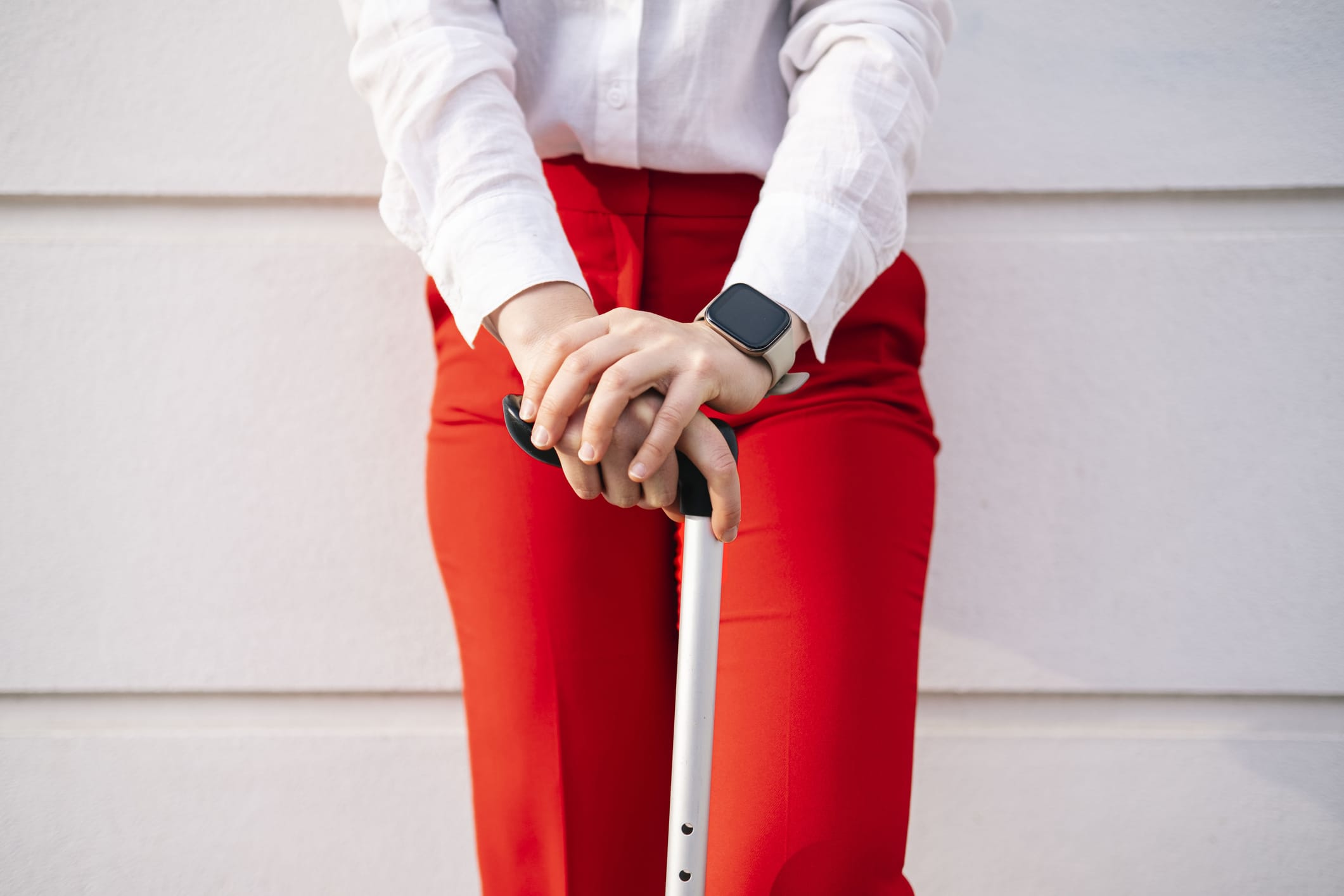
As muscle weakness progresses, mobility aids can make a significant difference to maintaining independence and staying active with myasthenia gravis (MG). Take the time to test out different options such as neck supports, walking sticks, walkers or mobility scooters to find what fits you best. At home you can personalize your space to make it safer and more easily accessible.
What kind of mobility aids are best suited to MG?
For many with MG, movement isn’t easy: MG can make muscles in the face, throat, neck, arms, shoulders, legs, hips and thighs weaker, and can mean severe fatigue and a lack of energy. Adapting to these physical limitations means being careful in where you spend your energy, and finding alternative ways to manage tasks that required little thought before MG.
If you are looking for ways to regain a sense of autonomy, start by talking to your healthcare team. Ask your neurologist for advice and recommended suppliers. Your physical therapist can help you get the most out of each mobility aid and ensure you’re using them safely. Common aids are:
Canes or walking sticks: A cane requires a certain level of upper body strength and balance, and it is mostly recommended if you just need a little extra support and balance.
Walkers and rollator walkers: Walkers don’t have wheels, and are meant to help with support and balance. Rollator walkers have two to four wheels, allowing for easy movement. They also often have a seat where you can rest.
Power wheelchairs or mobility scooters: These are particularly useful when you plan to spend time shopping or just being out and about. You can comfortably cover long or short distances without experiencing dragging fatigue or asking for help.
Before you make any decisions on equipment, check with your insurance provider what items and costs are covered.
Read about myasthenia gravis FAQs
Staying mobile and active at home when you have MG
Mobility aids aren’t just for when you’re away from home. You can also personalize your home environment to make the small tasks of daily life easier.
Here are some ideas to explore:
- To avoid stairs, consider installing a stair lift or ramp.
- To avoid the need to move between rooms, implement an open floor plan.
- Add grab bars in the bathroom and wherever else makes sense for your needs.
- Install a walk-in shower.
- Reduce floor rugs and other clutter to avoid falls.
- Consider an adjustable bed.
- Add a chair in the kitchen and in the laundry so you can do daily tasks while sitting down.
- Use electronic tools and appliances, such an electric can opener or electric toothbrush, to help save energy.
Staying active is key to maintaining independence and protecting your quality of life.
Sign up here to get the latest news, perspectives, and information about MG sent directly to your inbox. Registration is free and only takes a minute.
