
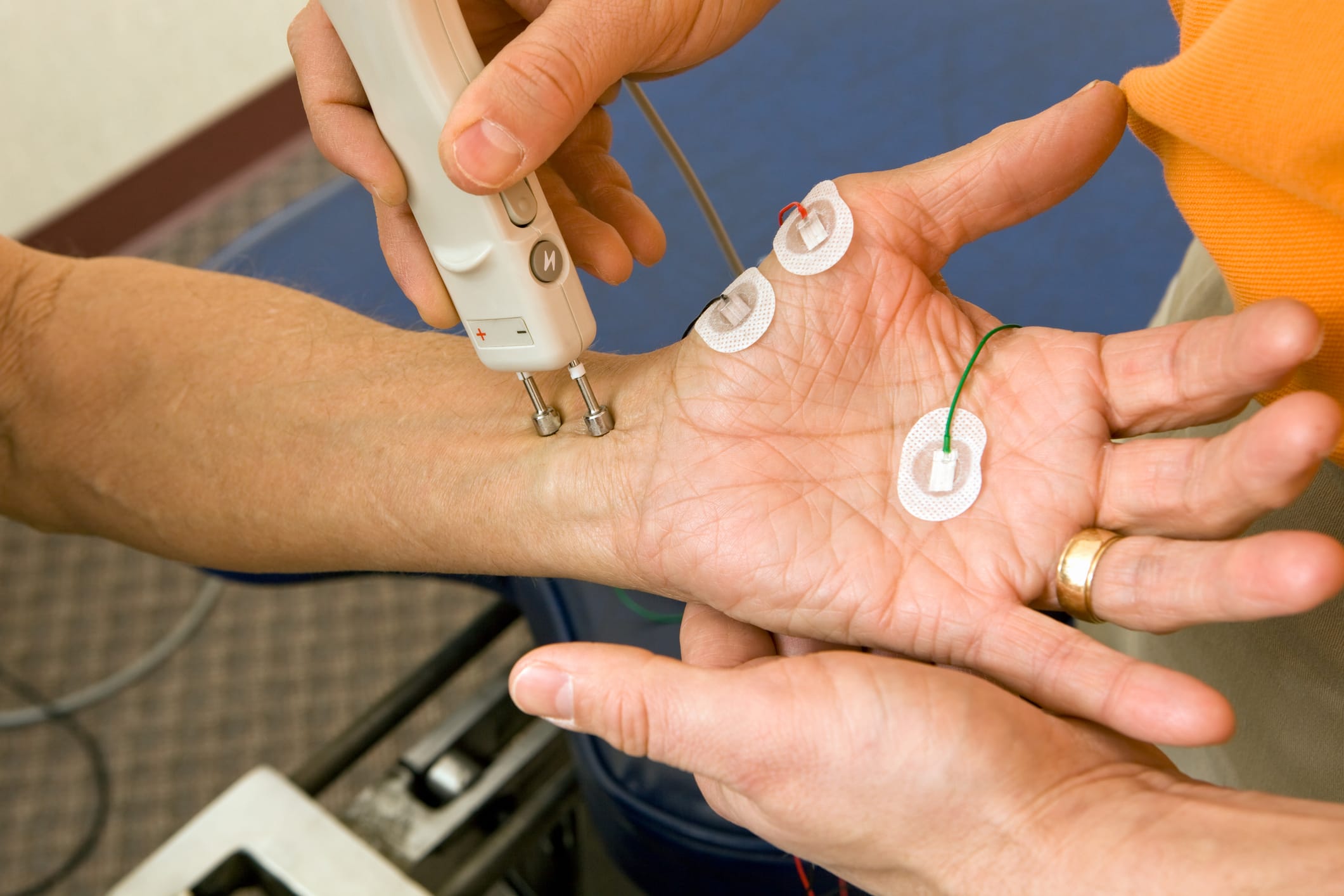
The repetitive nerve stimulation (RNS) test is one of many tests that can be used to diagnose myasthenia gravis (MG).
By checking for impairment in the function of the neuromuscular junction, RNS can detect signs of muscle weakness that could indicate MG. The test is quick, safe and noninvasive.
What does an RNS test measure?
In patients with MG, the body’s immune system attacks the neuromuscular junction, which is the region where the nerves and the muscles meet. Normally, this region allows electrical signals to be converted into chemical signals that trigger muscle contractions — but in MG, the signals don’t reach the muscles correctly.
Read more about MG testing and diagnosis
RNS uses electrodes, which are like stickers that stimulate the muscles by quickly delivering several pulses in a row. From this, the electrical activity of the muscle fibers can be calculated by measuring the amplitude of the signal. If the signal amplitude drops significantly over the course of the test, it may be a sign of a neuromuscular junction condition like MG.
How to prepare for your RNS test
Your doctor may ask you not to take certain medications for a few hours leading up to your test, including acetylcholinesterase inhibitors. You also should not have received botulinum toxins (such as Botox injections) in the past three to six months. Let your care team know if you’re taking blood thinners; the test can usually still be performed, but your doctors will need to account for that when interpreting your results.
Your RNS test may take a while, so you should plan to dress comfortably in loose clothing. In most cases, your health care provider will need direct access to your arms and legs, and you may need to wear a gown. You’re free to eat and drink normally leading up to the test. However, don’t wear any lotions or moisturizers, since they can interfere with the electrodes that will be placed on your skin.
Don’t be surprised if your provider asks you to wait in the test room for a few minutes and offers you a blanket or other warming device. When your limbs are colder, RNS tests can result in false negatives, since cool temperatures improve neuromuscular function.
What to expect during and after the test
Different muscles in the body might be tested, depending on where you’re experiencing symptoms. Some commonly tested areas include the hands, shoulders, legs or face. After placing the electrodes, your provider might carry out more basic tests by briefly stimulating the nerves.
During the RMS test itself, the electrode will rapidly deliver up to 10 pulses to the muscle. During this time, you might feel some discomfort. Some patients describe the feeling as comparable to static electricity, while others experience tingling. If you experience any pain during the test or feel faint, alert the technician.
If you also received single fiber electromyography, which involves needle electrodes, you might have some bruising at the placement site. Otherwise, most people don’t experience any side effects and can return to their daily life immediately after the procedure.
Does RNS carry any risks?
Overall, RNS is considered a safe test, and the risk of complications is low. In very rare cases, RNS may result in cardiac arrhythmias. If you have a heart condition or an implantable device, you should talk to your doctors about your personal risk.
Sign up here to get the latest news, perspectives, and information about MG sent directly to your inbox. Registration is free and only takes a minute.
