
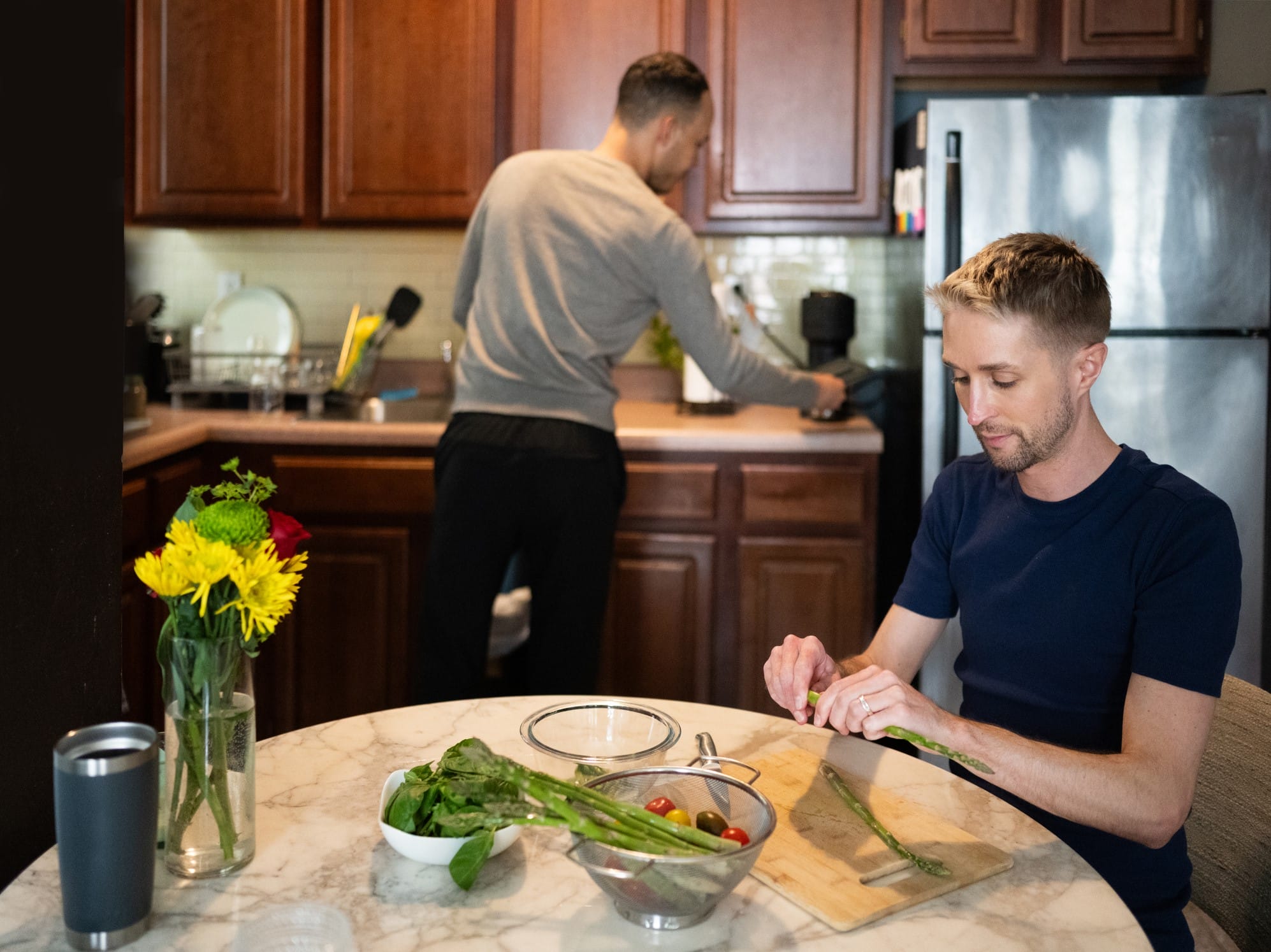
A nutritious diet that emphasizes fresh foods and vitamin-rich ingredients can help you stay healthy when living with a chronic disease like myasthenia gravis (MG). But for many patients, spending an hour preparing dinner (and cleaning up afterward) is something that’s just not on the table. Even eating a homemade meal might feel out of reach.
From the choice of recipe to the ingredients, there are ways to make your time in the kitchen easier. Here’s where to start.
Choosing what foods to cook
Start by choosing recipes for dishes that provide good nutrition while taking less effort to chew and swallow.
Finding foods that are easier to eat
- Avoid dry, crunchy or crumbly foods such as rice or dry bread, which might leave a reside in your throat.
- Also avoid tough, hard-to-chew ingredients such as large pieces of meat.
- Try soft and easy-to-chew foods, like mashed or pureed vegetables, soups, eggs, minced chicken and avocado.
- Sauces and gravies can help make solid foods easier to swallow.
- Prepare small portions that won’t tire you out when eating. These will be easier to digest, too.
Navigating nutritional concerns
- Avoid too much saturated fat or sugar: High-fat foods can lead to weight gain and fatigue, and sugar can make your energy crash.
- Avoid ingredients that are high in salt, and don’t add too much salt to food. This can worsen MG medication-related fluid retention.
- Be cautious of overly spicy foods: these can irritate the gastrointestinal tract and worsen the side effects of some MG-related medications, leading to diarrhea or nausea.
Read about myasthenia gravis FAQs
How to optimize your time in the kitchen
Muscle weakness, fatigue and low energy levels can impact your ability to spend long stretches of time in the kitchen. You may prefer to rely on family members to do the cooking, or set up a delivery of preprepared meals. However, having the choice of preparing simple meals can help maintain your independence as you navigate life with MG.
Here are some tips for making life easier in the kitchen:
Choose simple recipes: Choose dishes that require minimum effort, have fewer ingredients, less chopping or stirring and less cleaning up.
Be organized: Use a meal planner, and shop for (or order) your ingredients ahead of time.
Have the right tools: Choose knives and measuring cups that are easy to grip. If your pots are heavy, invest in lighter ones. Try using a protective glove if your hands tends to slip when chopping. Store your most-used tools in easy-to-reach locations, like the countertop or a lower cupboard.
Plan to cook earlier in the day: Prepare your meal in the morning when you’re feeling more energetic, then rewarm it in the evening.
Share the prepping and cooking: Ideally, plan to cook with a friend or family member. Delegate tasks that you find hard to manage, such as measuring ingredients if you have double vision, or chopping if you have reduced muscle strength.
Keep a chair close by: Conserve your energy by sitting while you prep, chop, stir and supervise. A counter- or bar-height chair may be worth considering.
Take regular breaks: If you are tired, don’t push through. Either factor in time to rest or, if necessary, turn everything off and go and lie down.
Finding the right methods for you might take some trial-and-error. A dietitian can help you with personalized advice on managing your diet and optimizing your time in the kitchen.
Sign up here to get the latest news, perspectives, and information about MG sent directly to your inbox. Registration is free and only takes a minute.
